





Eye For Film >> Movies >> Body Of Our Own (2026) Film Review


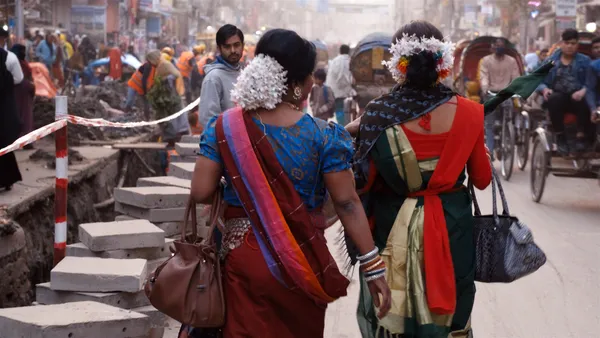

When people get bees in their bonnets about the idea that gender has always been a static and binary concept, it’s worth remembering that that’s very much a localised tradition. In many parts of the world, it’s more complicated – which is not to say that these different traditions all understand it in the same way, or are necessarily more liberatory than those of the UK. Across the Indian subcontinent, most people recognise three genders, with the most widedspread third gender tradition being that of hijras. This has existed for at least 800 years, successfully resisting the binary logic of British colonialism, but now it is rapidly changing in response to another external narrative: that of transgender people.
Rahemur Rahman and Lily Vetch’s short documentary, which screened as part of BFI Flare 2026, centres on the lives of three hijra women in Bangladesh. All of them have a past aligned with their traditional gender role: singing; dancing; providing blessings for weddings and babies; and sex work. One was so widely praised for her talent in the first two areas that she decided to make a stab at a career as a club performer, enjoying real success. Another is beginning a precarious new love affair as the film begins, and discusses the complexities of romance for hijras in a society where marriage is strongly linked to reproduction. All three are trying, in one way or another, to better their prospects.

In this context, growing awareness that some people transition and then simply live as women, like any other women, collides with the expectations they have always had for themselves. Even though this seems to offer a better quality of life, it’s not an easy thing to shift the boundaries of one’s personal identity. Although Bangladesh is primarily Muslim, the proximity of the Hindu caste system influences cultural ideas about social mobility, and it’s difficult to let go of the idea that one is inherently not good enough to deserve something better.
Filmed over seven years and edited down to just 25 minutes, Body Of Our own is observational in style but full of condensed meaning. Its subjects' diverse experiences mean it can cover quite a bit of ground whilst retaining its specificity, and ideas emerge from their conversations with one another which would be significantly harder for an outsider to get at through interview. Subjects range from the distress caused by lifelong dysphoria to the challenges of dating wealthy men. Shortly before the end, the film touches on a darker subject: just how ugly things can get when a hijra wants to leave her guru, a figure somewhere between mentor and pimp.
This is, of course, not the full story of hijra experiences, which are as varied as those of any other gendered group, but it is an intriguing portrait of three individuals living on the cusp of massive cultural change. The future remains uncertain, but now that it’s out there, this film will also serve to broaden its potential.
Reviewed on: 03 Apr 2026


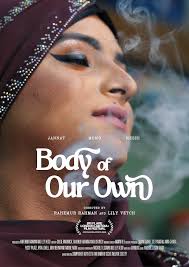
Director: Rahemur Rahman, Lily Vetch
Writer: Rahemur Rahman, Lily Vetch
Starring: Neshi, Jannat, Momo
Year: 2026
Runtime: 25 minutes
Country: UK
Search database:
